Balloon Angioplasty for Below-the-Knee Artery Blockage
Author: Prof. Dr. Murat Canyiğit, Interventional Radiologist
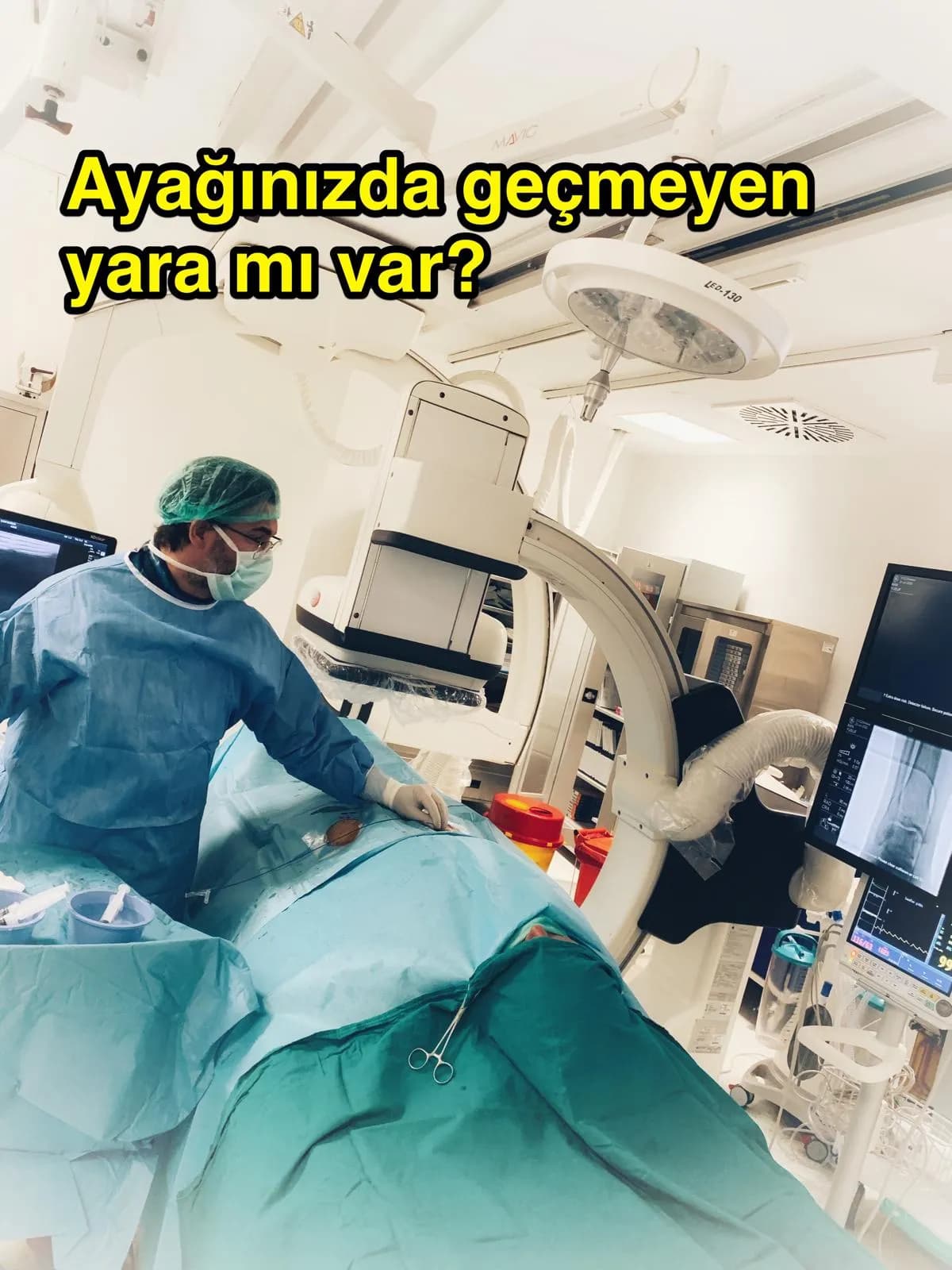
The below-the-knee (tibial) arteries carry blood from the lower leg to the foot. Narrowing or blockage here can cause rest pain and wounds that do not heal, especially in diabetic and older patients. This condition is called chronic limb-threatening ischemia (CLTI).
Because these vessels are thin, the area is technically demanding. In interventional radiology a thin catheter is introduced through the groin or ankle and the vessels are opened without incision using small-diameter (3–3.5 mm) balloons.
In a 2026 study by Prof. Dr. Murat Canyiğit and colleagues in Diagnostic and Interventional Radiology, 40 patients who underwent balloon angioplasty of tibial lesions were analyzed. Foot ulcers were present in 90%. Over a mean follow-up of 92 days, wound healing was 69.7% and limb salvage 94.6%; no patient required target-vessel reintervention.
In a 2025 study of 17 patients with severely calcified below-the-knee arteries, 3 mm and then 3.5 mm balloons were used under intravascular ultrasound (IVUS) guidance. Lumen diameter and area increased significantly, only a median of 2 mL contrast was used, no major amputation occurred, and wounds healed in 62.5% of those with ulcers.
These are single-center retrospective studies with limited patient numbers and follow-up. Results are not the same for every patient; the appropriate treatment is decided after examination and vascular imaging.
Calf pain when walking, foot pain at rest, a cold or discolored foot or a wound that does not heal call for prompt specialist assessment. This article is general information.
Scientific sources
- Canyiğit M, Beşler MS, Kaya T. Physiological indices for evaluating balloon angioplasty outcomes in below-the-knee artery lesions of patients with CLTI. Diagn Interv Radiol, 2026
- Beşler MS, Sözeri A, Canyiğit M. Effectiveness of balloon angioplasty under intravascular ultrasound guidance in calcified below-the-knee tibial arteries. Diagn Interv Radiol, 2025
The information on this page is general and does not replace an examination. Diagnosis and treatment decisions are made only after an in-person consultation. In an emergency (sudden chest or back pain, signs of stroke, rapidly progressing blackening or infection of the foot) call 112 without waiting.
Book Appointment