How Can the Risk of Amputation Be Reduced in Diabetic Foot?
Author: Prof. Dr. Murat Canyiğit, Interventional Radiologist
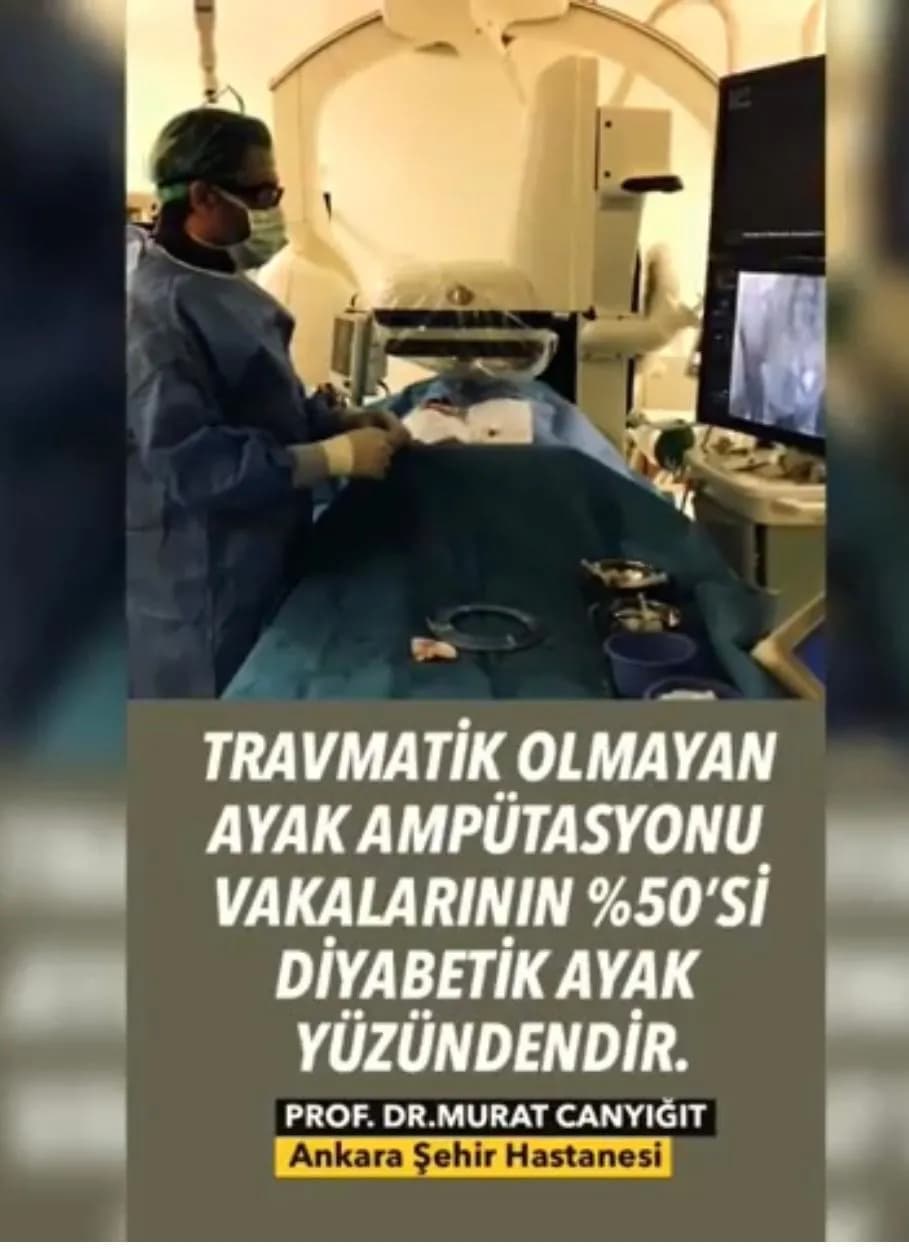
Foot ulcers in diabetic patients, and the amputation (loss of a foot or leg) that can follow, are a preventable problem. Risk rises when nerve damage (neuropathy) hides pain, artery blockage reduces blood flow and infection come together.
A daily foot check is one of the most effective measures: look over the soles, between the toes and the heels every day, with a mirror or with the help of a relative, and seek care without waiting if you notice redness, cracks, blisters, calluses or bruising.
Shoes should be comfortable, wide-toed and seamless; avoid walking barefoot. Cut nails straight, do not cut calluses yourself and avoid heating pads or hot-water bottles on the feet, because when sensation is reduced a burn may go unnoticed.
Keeping blood sugar in the target range, controlling blood pressure and cholesterol and quitting smoking slow both nerve and vessel damage.
If there is a wound on the foot that does not heal, wound care alone is not enough; the arteries must also be assessed. Blood flow is examined with the ankle-brachial index, Doppler ultrasound and, when needed, angiography. If there is a blockage, interventional radiology can open the vessel without incision using a balloon and stent to support healing.
A rapidly growing wound, bad smell, pus, fever or blackening of the foot is an emergency. This article is general information; diagnosis and treatment require an examination.
The information on this page is general and does not replace an examination. Diagnosis and treatment decisions are made only after an in-person consultation. In an emergency (sudden chest or back pain, signs of stroke, rapidly progressing blackening or infection of the foot) call 112 without waiting.
Book Appointment