Buerger Disease Treatment
Opening blocked arteries with angiography in Buerger disease.
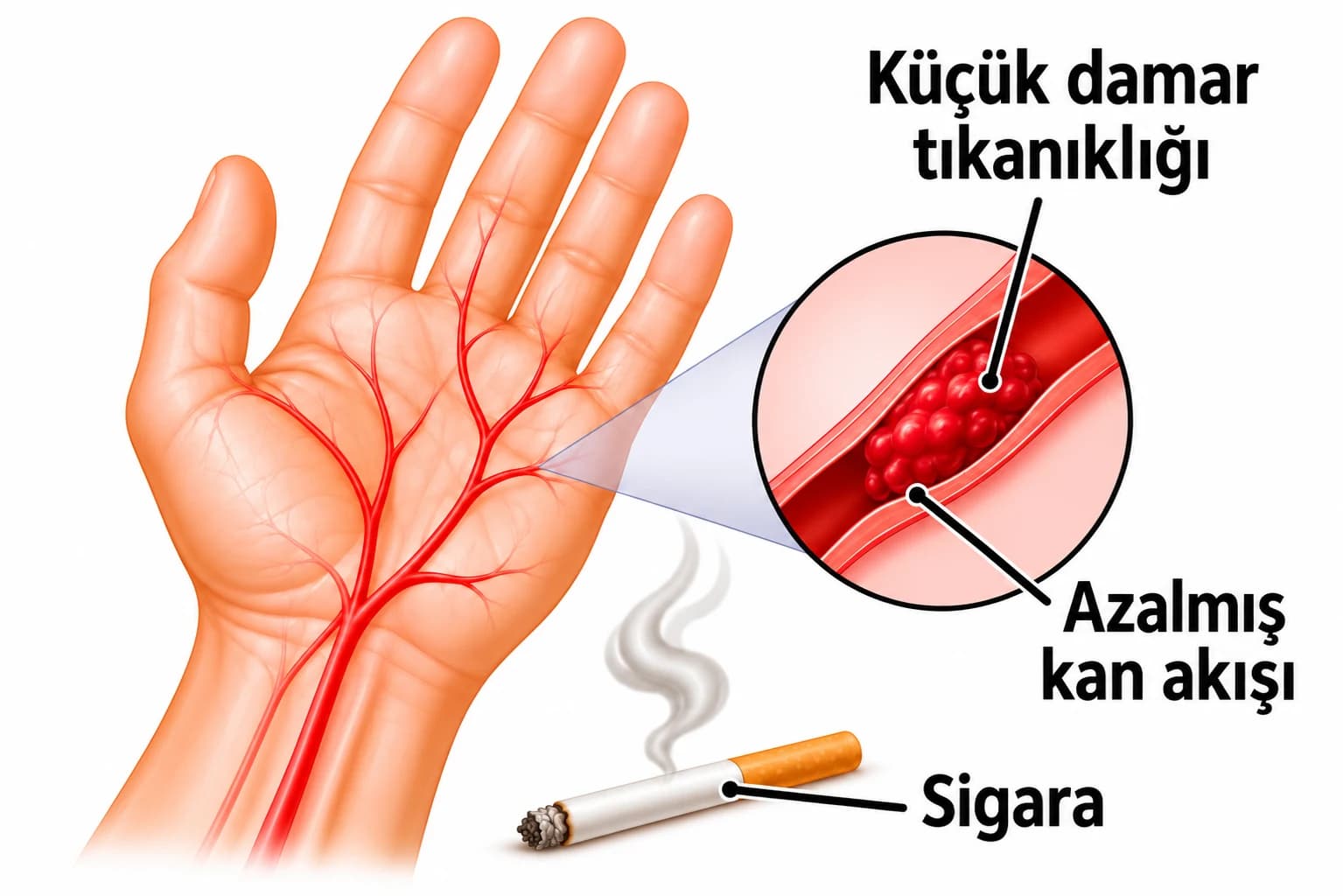
Buerger disease (thromboangiitis obliterans) is a disease in which small and medium-sized arteries of the hands and feet become inflamed and blocked. It mostly affects young and middle-aged people who smoke or use tobacco.
The foundation of treatment is stopping all tobacco use. In suitable patients blocked arteries can be opened with a balloon under angiography to improve blood flow to the foot.
Symptoms
Cold hands and feet, white or purple discoloration, pain in the sole or calf when walking, pain at rest and sores on the fingertips or toes that do not heal are the main symptoms. They may worsen in the cold.
Diagnosis
Diagnosis is made by examination, color Doppler ultrasound and angiography. Conditions with a similar picture, such as diabetes, atherosclerosis and rheumatic diseases, are investigated.
Treatment with angiography
Because the vessels are thin and may be blocked over long segments, opening them is not possible in every patient. In suitable patients, below-the-knee and foot arteries are opened with a balloon through a thin catheter introduced at the groin or ankle. The aim is to reduce pain, support wound healing and save the foot.
Treatment is combined with support for quitting smoking, wound care, pain control and medication. If smoking continues, the disease progresses and the risk of losing the foot increases.
Consultation and appointments
Consultations and procedures are carried out in person at Ankara Bilkent City Hospital, Neuro-orthopedics Building, Department of Radiology, Interventional Radiology Unit. Please bring previous reports, films and CDs and your current medication list. To book, call or message us on WhatsApp.
FAQ
Does the disease stop if I quit smoking?
When all tobacco use stops, progression halts or slows in most patients. This is the most important step of treatment.