What Is Interventional Radiology?
Author: Prof. Dr. Murat Canyiğit, Interventional Radiologist
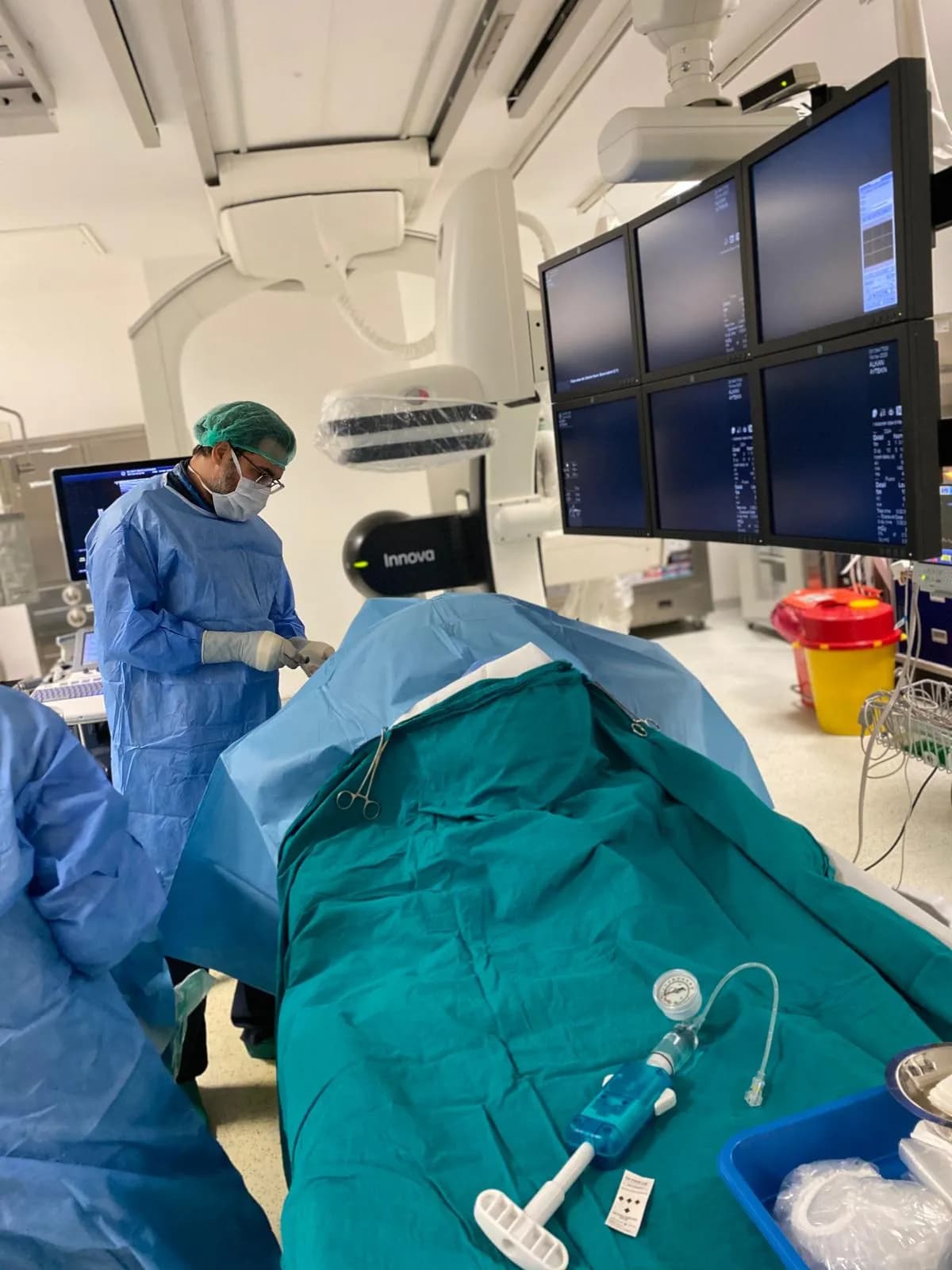
Interventional radiology covers treatments performed with thin catheters and needles under imaging guidance such as ultrasound, CT, MRI and angiography.
Most procedures use local anesthesia, hospital stays are short and recovery is quick.
The basic idea of interventional radiology is to reach the target through a small entry point under imaging guidance instead of performing a large operation. A thin catheter introduced through a vessel at the groin or wrist is advanced to the area to be treated under X-ray guidance.
Which conditions are treated? Blockages of the leg and groin arteries and the narrowing that accompanies diabetic foot ulcers, aortic aneurysm, carotid artery narrowing, vascular malformations, uterine fibroids and some liver tumors are the main areas. See the Treatments page for details.
How is it different from surgery? Interventional radiology usually needs no general anesthesia, the incision is very small or absent, the hospital stay is short and return to daily life is quick. However, an endovascular method is not sufficient or suitable for every disease; in some cases surgery or medication is the better option. This decision is made after examination and imaging, together with other specialties when needed.
Bringing previous reports, films and a list of your medications to the first consultation speeds up the process.
The information on this page is general and does not replace an examination. Diagnosis and treatment decisions are made only after an in-person consultation. In an emergency (sudden chest or back pain, signs of stroke, rapidly progressing blackening or infection of the foot) call 112 without waiting.
Book Appointment