Endovascular Treatment of Aortic Aneurysm and Dissection
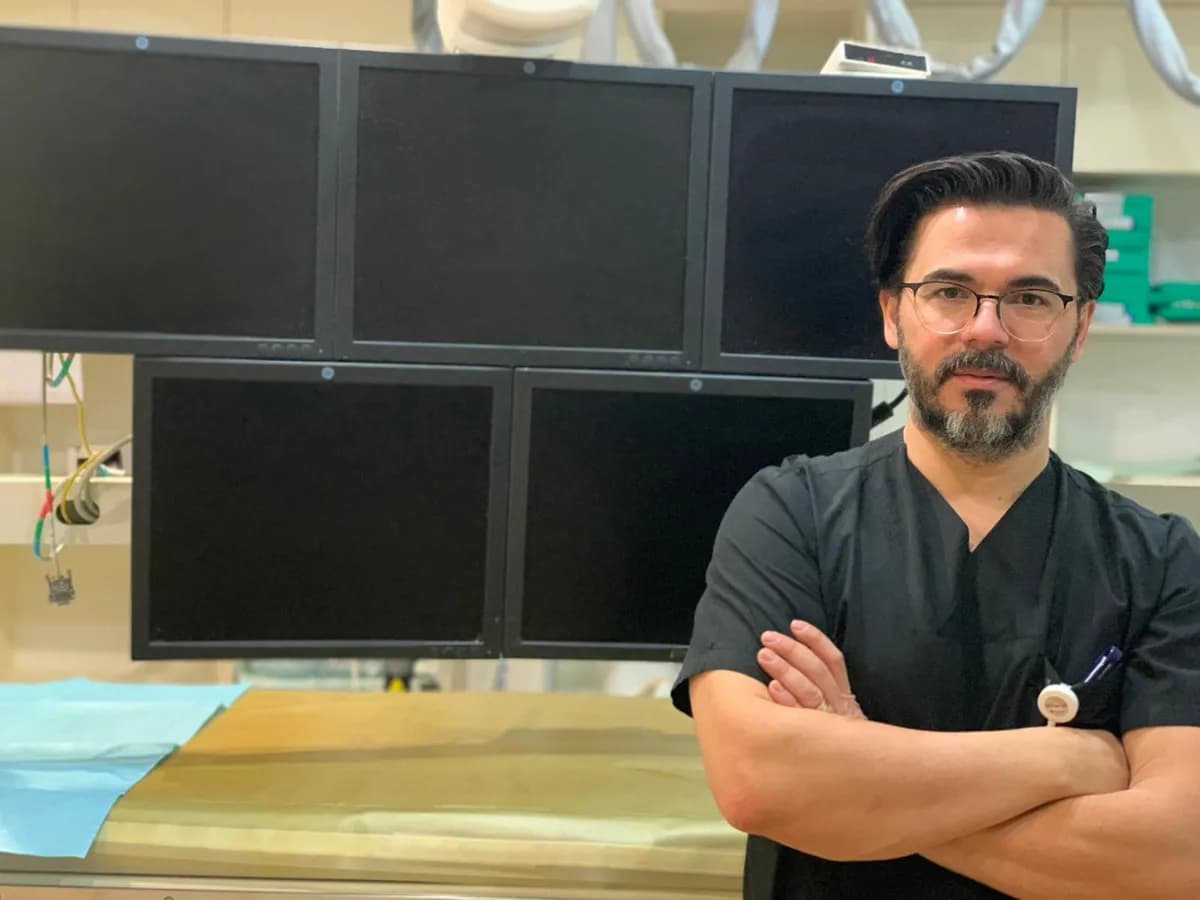
Author: Prof. Dr. Murat Canyiğit, Interventional Radiologist
The aorta is the main artery leaving the heart. Bulging (aneurysm), tearing (dissection) or a pseudoaneurysm in its wall can be life-threatening. Open surgery is the traditional treatment; in suitable patients a stent graft placed through the blood vessels allows treatment without open surgery.
In a 2016 study in Diagnostic and Interventional Radiology co-authored by Prof. Dr. Murat Canyiğit, 31 patients treated endovascularly for acute thoracic aortic syndrome were evaluated. Complicated acute type B dissection was the most frequent condition (35.5%). Procedural success was 100% and in-hospital mortality 9.7%; among those alive at 30 days there were no late deaths over a mean follow-up of 25.9 months.
The authors noted that endovascular repair may be considered a first-line option in emergencies, especially when open surgery is too risky. The same team also reported a ruptured aortic arch pseudoaneurysm treated with parallel grafts in 2019.
The suitable approach is decided by examining the anatomy with CT angiography. This article is general information; sudden severe chest or back pain is an emergency, call 112.
Scientific sources
- Uğuz E, Canyiğit M, Hıdıroğlu M, et al. Treatment of acute thoracic aortic syndromes using endovascular techniques. Diagn Interv Radiol, 2016
- Canyiğit M, Erdoğan KE, Ateş ÖF. Total endovascular aortic arch repair using chimney and periscope grafts for ruptured aortic arch pseudoaneurysm. Diagn Interv Radiol, 2019
The information on this page is general and does not replace an examination. Diagnosis and treatment decisions are made only after an in-person consultation. In an emergency (sudden chest or back pain, signs of stroke, rapidly progressing blackening or infection of the foot) call 112 without waiting.
Book Appointment